
Share
On Apollo Moon missions, the lunar module would blast off from the Moon’s surface and dock with the command module in lunar orbit. After doc
Question
On Apollo Moon missions, the lunar module would blast off from the Moon’s surface and dock with the command module in lunar orbit. After docking, the lunar module would be jettisoned and allowed to crash back onto the lunar surface. Seismometers placed on the Moon’s surface by the astronauts would then pick up the resulting seismic waves.
Find the impact speed of the lunar module, given that it is jettisoned from an orbit 110 km above the lunar surface moving with a speed of 1600 m/s .
My Approach:
Ei = Ef
1/2*m*vi2 – (G*m*ME)/(radius of moon + orbital distance) = 1/2*m*vf2 - (G*m*ME)/r
=> (0.5 * m * 16002) – (6.67 * 10-11 * 7.35*1022 * m/(1737.4*103 +180*103) = (0.5*m*v^2) – (6.67*10-11 * 7.35*1022 * m/(1737.4*103 )
in progress
0
Physics
4 years
2021-08-16T20:05:49+00:00
2021-08-16T20:05:49+00:00 1 Answers
23 views
0

Answers ( )
Answer:
Following are the solution to the given question:
Explanation:
For crashing speed, we can use energy conservation:
kinetic energy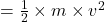
potential energy
moon mass
Radius
Calculating the mass drop for the leave:
Solve the value for
The approach is correct but misrepresented in replacing 180 km instead of 110 km.