Share
A proton (mass mp), a deuteron (m = 2mp, Q = e), and an alpha particle (m = 4mp, Q = 2e), are accelerated by the same potential difference V
Question
A proton (mass mp), a deuteron (m = 2mp, Q = e), and an alpha particle (m = 4mp, Q = 2e), are accelerated by the same potential difference V and then enter a uniform magnetic field B where they move in circular paths perpendicular to B. Determine the radius of the paths for the deuteron and alpha particle in terms of that for the proton.
in progress
0
Physics
4 years
2021-07-28T21:33:42+00:00
2021-07-28T21:33:42+00:00 1 Answers
59 views
0

Answers ( )
Answer with Explanation:
We are given that
Mass of deuteron=
Charge, Q=e
Mass of alpha particle=
Charge,q=2e
Magnetic field=B
Mass of proton=
Let radius of path of proton=r
Using the formula
Velocity of proton=
Centripetal force =Magnetic force
Radius of proton,
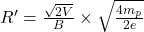
Radius of deuteron,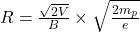
Radius of alpha particle,