
Share
a motorcar is moving with a velocity of 108 km / h and it takes 4s to stop after the brakes are applied calculate the force exerted by the b
Question
a motorcar is moving with a velocity of 108 km / h and it takes 4s to stop after the brakes are applied calculate the force exerted by the brakes on the motorcar if it’s mass along with the passengers is 1000 kg
in progress
0
Physics
4 years
2021-08-28T06:07:14+00:00
2021-08-28T06:07:14+00:00 2 Answers
26 views
0

Answers ( )
Answer: – 7500N
Explanation:
Given the following :
Initial Velocity of car = 108km/hr
Time taken to stop after applying brakes = 4s
Mass of passengers in car = 1000kg
Force exerted by the brakes on the car =?
After 4s, then final Velocity (V) = 0
Initial Velocity (u) of the car = 108km/hr
108km/hr = (108 × 1000)m ÷ (3600)s = 30m/s
Force exerted = mass(m) × acceleration(a)
Acceleration of car = Change in Velocity with time
a = (v – u) / t
a = (0 – 30) / 4
a = – 30/ 4
a = – 7.5m/s^2
Therefore,
Force exerted = mass(m) × acceleration(a)
Force exerted = 1000kg × (-7.5)m/s^2
Force exerted = – 7500N
Answer:
The force exerted by the brakes on the motor car is -7500 N.
Explanation:
Given :-
To find :-
Solution :-
Since the car stops, the final velocity (v) will be 0 m/s.
• Initial velocity (u) = 108 km/h.
Converting initial velocity into m/s.
We know that,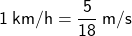
Then initial velocity,
= [108 × 5/18 ] m/s
= 30 m/s
Now find the force exerted by the brakes.
★ Formula used :
The force exerted by the brakes on the motor car = -7500 N.
•The negative sign of force(F) means that the force was applied in opposite direction of motion.
__________________