Share
Problem: A disk of mass m and radius r is initially held at rest just above a larger disk of mass M and radius R that is rotating at angular
Question
Problem: A disk of mass m and radius r is initially held at rest just above a larger disk of mass M and radius R that is rotating at angular speed wi. What is the final angular speed of the disks after the top one is dropped onto the bottom one and they stop slipping on each other? Note: the moment of inertia of a disk of mass M and radius R about an axis through its center and perpendicular to the disk is I = (1/2)MR2.
in progress
0
Physics
5 years
2021-07-14T20:39:42+00:00
2021-07-14T20:39:42+00:00 1 Answers
21 views
0

Answers ( )
Answer:
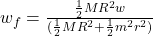
The final angular velocity is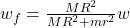
Explanation:
From the question we are told that
The mass of the first disk is m
The radius of the first disk is r
The mass of second disk is M
The radius of second disk is R
The speed of rotation is w
The moment of inertia of second disk is
Since the first disk is at rest initially
The initial angular momentum would be due to the second disk and this is mathematically represented as
Now when the first disk is then dropped the angular momentum of the whole system now becomes
This above is because the formula for moment of inertia is the same for every disk
According to the law conservation of angular momentum
=>